A Bootstrapped PM Dashboard
Problem
I've always found it fascinating that when someone shares their screen, the first few things you notice are their cluttered desktop and their backlog of unopened emails. It's either a sneak peek into their mind, their workday, or both.
For me, the next illuminating thing to watch for are their browser tabs. And PMs tend to have many of them open. 15 Jira tickets. 6 Confluence pages, 5 Amplitude dashboards, 4 Excel sheets, 3 PowerPoint decks, a year-old research paper, and a Fond points programme to grease someone's palms. I've seen worse.
The less glamorous truth is that we context switch constantly. But, we've all imagined a single place where everything can be referenced at a click.
Solution
So, after a recent Codex learning session, I hypothesised about building something like that. Dependencies aside, I stitched some of my frequented applications together.
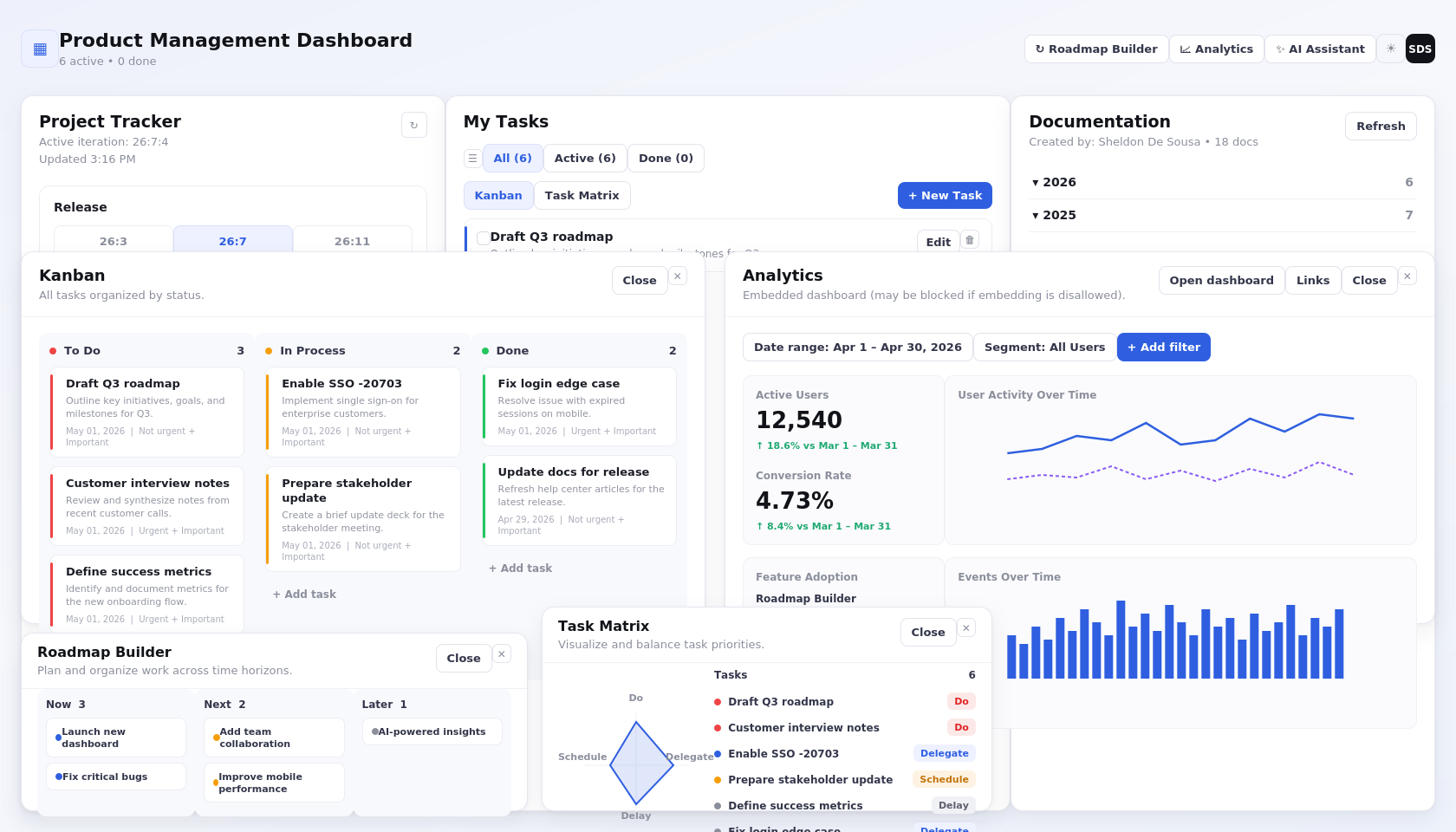
Here's what ended up inside it:
- Jira, with a live sprint view, stories with acceptance criteria, comments, and alerts when stories get updated
- Confluence with quick access to every page I've authored
- Amplitude with analytics embedded for every project or feature I work on
- Task management with a personal task list, a Kanban board to track progress, and an Eisenhower matrix for prioritisation
- A drag and drop Roadmap builder with a built in RICE model, including features and epics for quick socialising
Most of it in one place. I would have loved to integrate Teams and Outlook, but I had to skip those.
The architecture includes a React frontend, a Node.js backend handling API calls, and browser localStorage. I brought in design components from Figma and eventually published a case study to Confluence using MCP through Codex.
Takeaway
But here's what's interesting.
I'm not a developer. A few years ago, building something like this would be nearly impossible. It would mean scoping a project, finding engineering resources or buying a subscription, and probably settling for something simpler than what I had in mind.
Instead, I described a problem. Worked with Codex. Iterated. A few hours later, I had something running.
The barrier to building isn't technical anymore. It's believing you're allowed to.